S&OP explained in 3 minutes
Why you never seem to have the right amount of milk
So you're an SME and you want to introduce S&OP to your business.
You know it's best practice, but most of the business hasn't really been exposed to it, and the moment you try to explain it, it can sound heavier than it needs to be.
So how do you make it simple enough for every department to understand?
One way is to start with something everyone recognises: ordering milk for the office.

I thought this would be easy.
Today was a big day. I had been given the most visible responsibility in the office: I was in charge of the milk. Before ordering anything, I looked at what normally happens, asked a few questions and made some assumptions.
Based on what we know today, six bottles seems like our best estimate for next week. It isn’t a perfect prediction. That’s the forecast.
The forecast gets better when more people contribute what they know. Someone might know that more people are coming into the office, while someone else might know that fewer people will be in. Once we agree that six bottles is the best current plan, that’s consensus.

Then reality kicked in.
A new starter joins. Marketing orders coffees. More people are coming into the office than expected.
Also, I swear someone requested goat’s milk in a passing conversation. I can’t prove it, and it has hardly been touched.
Suddenly six bottles doesn’t feel so confident. But the forecast wasn’t wrong. The situation simply changed. Good planning isn’t about predicting the milk perfectly; it’s about adapting the plan as new information becomes available.

Constraints appear.
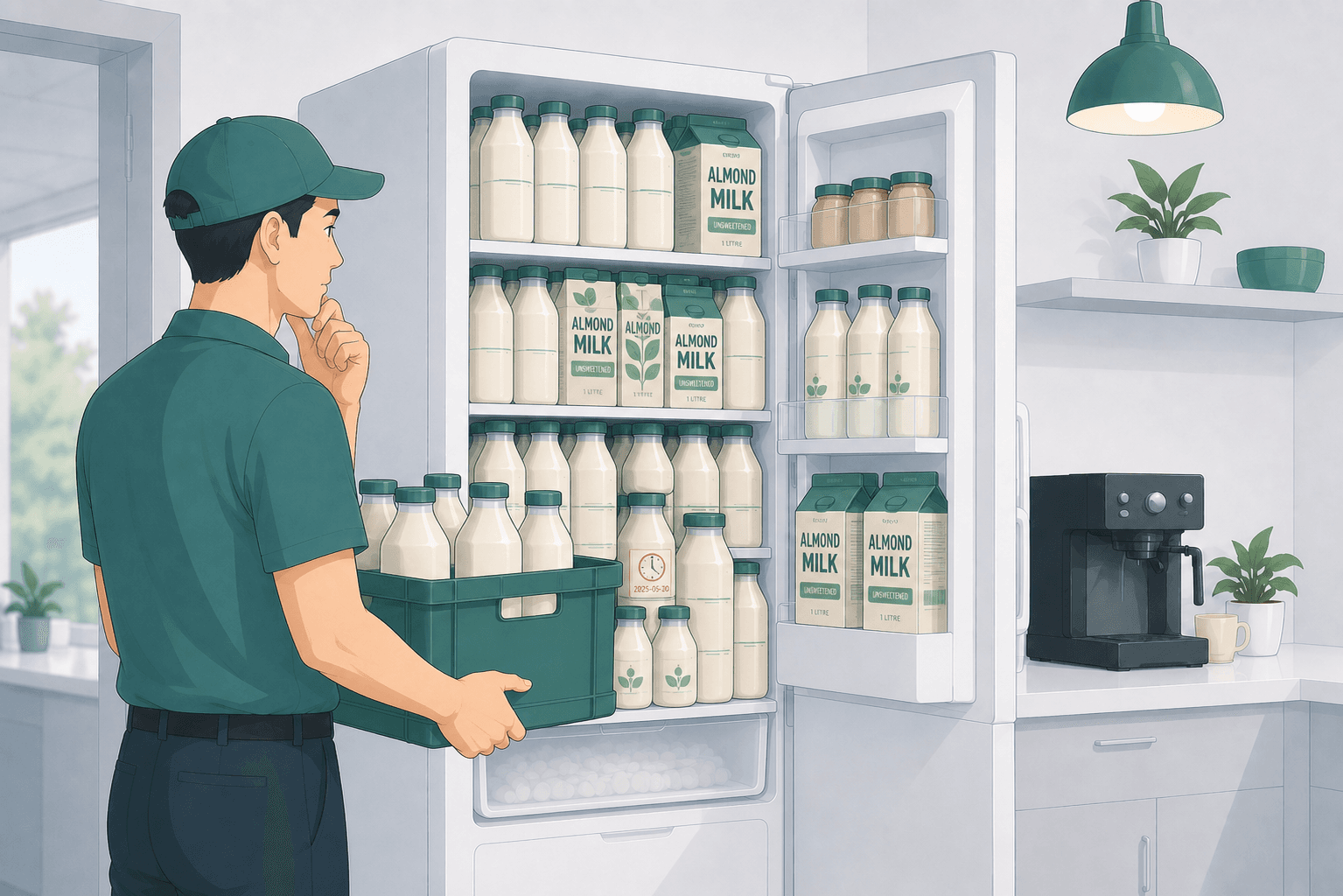
There isn’t enough space in the fridge for today’s delivery. The cupboard is pretty stacked too.
The milk already in the fridge includes a bulk deal on almond milk that looked cheaper at the time. It turns out to be slow moving and some of it may expire.
Even if we decide we need more milk, we still have to pay for it, arrange the delivery, find somewhere to store it and use it before it expires. The size of the fridge limits what we can actually do. Good planning means balancing how much milk we want, what is possible and what the plan will cost.
Everyone has a different view.
Nobody is actually wrong. One person hates running out of milk. Another worries about buying too much and throwing it away. Someone else is thinking about what the milk costs and how much space it takes to store.
Marketing is excited about their coffee event and wants to make sure there is plenty, while someone else is asking whether the extra milk is worth the extra cost. Everyone is trying to solve the same problem, but each person cares about a different part of it.
We are all looking at the same situation through a different lens.

One shared plan.
Better outcome.
We review what has changed, challenge our assumptions and agree what to do differently. Instead of leaving with several different opinions, we leave with one shared plan.
The goal isn’t a perfect plan. The goal is for everyone to understand the decisions and move forward together.
The fridge is stocked just right. We have bought the right amount, avoided unnecessary waste and people are happy. And I’m not ordering milk every day. Next week we’ll compare what actually happened with what we expected, learn from it, improve the forecast and then do it again.
I suddenly realised this was never really a story about milk.
This is where Sales & Operations Planning lives.